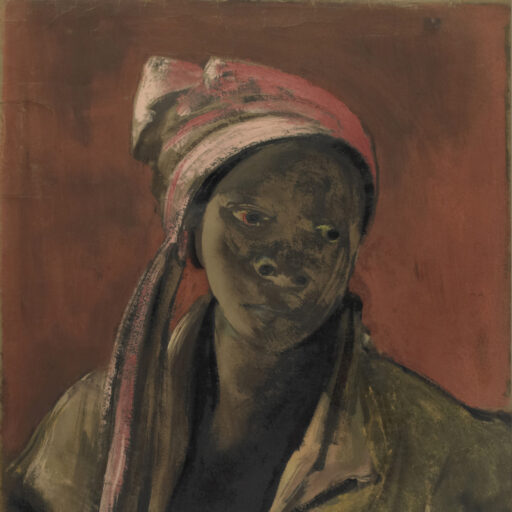



Last drawing, 16/04/1965

The Work
- Title: Last drawing
- Artist: Floris Jespers
- Date: 16/04/1965
- Technique: Ballpoint pen on paper
- Dimensions: 16 x 21 cm
In Essence
This drawing, created just a few hours before his death, is the most intimate and moving document from the life of Floris Jespers. It is not a fleeting sketch, but a conscious and lucid testament. By drawing the symbol of the swan on the table, the artist deliberately directed his own 'swan song', the perfect epilogue of to the 'full story' that this collection tells.
A Deeper Look
A Testament on the Table
The drawing shows a final, loving inventory of the themes that gave the artist's life meaning. The still life on the table—with his cello, an open book, flowers, and fruit—is a direct, moving reference to his past. The cello cello is a specific echo of his youth as a professional musician and the baroque cello from 1753 with which his artistic journey began. Art (the frames on the wall), literature (the book), nature (flowers), and sensory pleasures (fruit) together form a final summary of his world.
The Circle is Complete
This drawing forms the moving reverse of the poem 'Marc groet 's morgens de dingen' by his friend Paul van Ostaijen. Where the child brings the world to life, the old master here takes leave of that same world with a deep, wistful peace. The circle is also closed by the quiet presence of his wife Olympe, the caring witness, whom he portrayed so vividly in his youth and who stood by him until the end.
The Ultimate Freedom
As an embodiment of his final artistic phase , "The Freedom of Painting", the technique here is stripped of all pretension. The choice of an everyday ballpoint pen on lined paper is an act of artistic humility. All complex techniques have been abandoned; what remains is the most direct, pure, and unfiltered line. Although the line shows a physical fragility, the perfectly balanced composition testifies to a lifelong mastery that remained intact until the end.
A Unique Document
This drawing, a rare document humain, forms an indispensable diptych with the work 'Clown with the Angel of death'. Where the 'Clown' depicts the anxious confrontation with the unknown, this 'Swan Song' shows the serene and loving acceptance of farewell to the known. Together, they offer a complete and unique insight into the final phase of the artist's life.