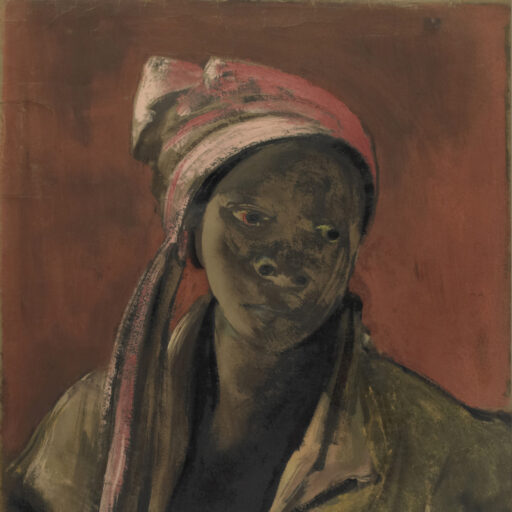



The Importance of an Indivisible Heritage: The Floris Jespers Collection

The Floris Jespers collection is not a random assortment but an exceptional and unrepeatable cultural archive of museum proportions. Its value lies not only in the individual masterpieces but in the unique coherence that tells 'the full story'of a key figure in Belgian art history. From his only, prophetic childhood drawing to the lucid 'swan song' made two days before his death, this collection offers an unparalleled insight into a complex and influential artistry.
An Unprecedentedly Complete Art-Historical and Human Archive
The exceptional richness of this collection (+900 works and documents) offers a depth that is invaluable to researchers and the public. In crucial areas, the collection is the most complete that can exist.
- Graphic Work as a Goldmine: The collection contains the most complete set of Jespers' etchings, including all 'states' and previously unknown works. This enables in-depth, comparative research into his technique and evolution in a way that is possible nowhere else;
- Intimate Insights: The presence of intact sketchbooks – an extreme rarity and studies from all his periods provides a direct and intimate look into his creative process.
- Canonical Key Works: The collection contains not just paintings, but the definitive benchmarks of his career. These include the work Jespers himself considered his most important, ‘The Annunciation‘, and the monumental work ‘Synthèse du Congo‘ for Expo '58.
- Literary and Personal Crown Jewels: The collection holds not only the most complete set of books illustrated by Jespers but also a cultural relic of the highest order: the unique, dedicated manuscript of Paul van Ostaijen's poem ‘Marc groet ’s morgens de dingen’. The added, handwritten dedication ‘Aan Marc Jespers van Paul’ reveals that this iconic poem was an intimate gift to Floris Jespers' son, making the deep friendship between these two giants of modernism tangible.
- The Man Behind the Artist: Personal heritage objects such as his field easel and the unique baroque cello from 1753 on which he played as a musician make the artist tangible as a person and connect his art directly to his life.

The Bridge Between Worlds: A Crucial Cultural Document
More than an artistic overview, the collection functions as a crucial document embodying the complex cultural and societal dynamics of the 20th century. Jespers built bridges between worlds that give his work exceptional relevance today:
- Between Flanders and the World: Rooted in the Flemish tradition, Jespers was an artist with international allure. His contacts with the European avant-garde, from Theo van Doesburg to the admiration of Picasso, position him as a Flemish master on a global stage.
- Between Tradition and Modernity: This fundamental tension is at the core of his oeuvre. The seed for this lies in his double-sided childhood drawing: on one side, a pastoral, timeless scene; on the other, the ultimate symbol of the modern future, an aeroplane. The collection shows how this duality shaped his entire life.
- Between Europe and Africa: The famous Congolese period was not a radical break, but the logical culmination of a lifelong search for authenticity and an 'earthly spirituality'. This quest began in the 1940s in Flanders with works like 'The Annunciation'. His African work, with the Expo '58 painting as its most complex expression, is therefore an indispensable and multi-layered document for the decolonization debate.

The Risk of Fragmentation: Why the Whole Must Be Preserved
Not the individual works, but their dialogue makes this collection unique.
The true power of this collection lies in its indivisible coherence. Fragmentation would irrevocably destroy the deeper layers of meaning.
- The prophetic childhood drawing only gains its full meaning alongside the mature works it foretells.
- The Congolese works are only truly understood as the logical continuation of the spiritual quest that began in Flanders.
- The moving dialogue between the youth of the father and that of the son—between Jespers' own childhood drawing and the poem Van Ostaijen wrote for his son Marc—can only be experienced when these unique pieces remain together;
- The final 'swan song' forms the perfect epilogue to the story that began with the first pencil strokes.
Allowing this whole to be fragmented would mean a repeat of the"Ensor trauma", where crucial national heritage is lost forever. This collection is a complete story that must be preserved, researched, and made accessible as a single entity for the future.
Given Jespers' international allure and the universal themes in his work, this collection also enjoys concrete interest from beyond the national borders. A future in Flanders is the wish, but not a given.
