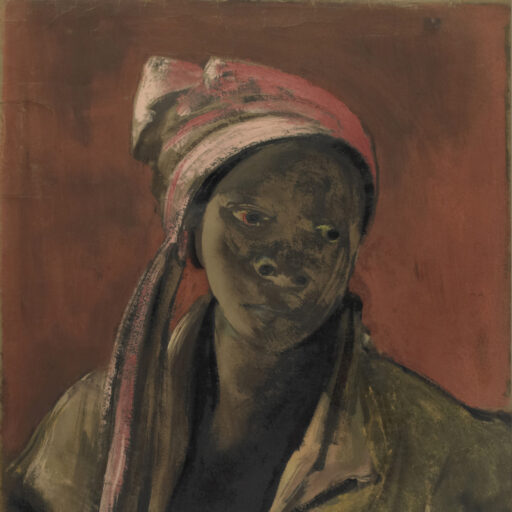



Paysage à l'odeur de savon parfumé (Landscape with the scent of perfumed soap)

The Work
- Title: Paysage à l’odeur de savon parfumé
- Artist: Floris Jespers
- Date: 1964
- Technique: Oil on canvas
- Dimensions: 80 x 100 cm
In Essence
This powerful and vital painting is considered the most important work from Floris Jespers' late Spanish period . It is a testament to his late creative vitality and a perfect example of the absolute artistic freedom that characterised his final phase of life. The work is not a mere representation of a landscape, but an intense, sensory, and poetic memory.
A Deeper Look
The Scene: A Sensory Landscape
The painting depicts a dynamic and fragmented rural landscape, bathed in the sun-drenched and dry atmosphere of Spain. A stooped figure, a cart, and an animal tumble through a landscape of red earth and mountains. The enigmatic title, "Landscape with the scent of perfumed soap", adds a strange, sensory dimension , suggesting that the artist paints not only what he sees, but also what he smells and experiences.
The Symbols: Nature, Culture, and Memory
The title is the key to the symbolism and opens the door to two interpretations. It may refer to a surreal clash between the raw, earthy nature and the unexpected, 'civilised' scent of soap. However, it could also be a poetic and synaesthetic description of the scent of the white, lily-like flowers in the painting. In either case, it is clear that the work captures a complex, zijn van de geur van de witte, lelie-achtige bloemen in het schilderij. In beide gevallen is het duidelijk dat het werk een complexe, multi-sensory memory.
The Link: The Freedom of the Late Master
This work is the ultimate embodiment of Jespers' final artistic phase, "The Freedom of Painting".All previous stylistic conventions seem to be abandoned in favour of a pure, intuitive, and passionate art of painting. The explosive style contrasts sharply with the cool, controlled perfection of the "Harbour" églomisé, made in the same year, and with the fragile, serene line of the "Last drawing""Last drawing". This shows the unimaginable versatility and the unquenchable creative drive of the artist to the very end.
The Pinnacle of the Spanish Period
This painting is recognised as the most important painting from the period Jespers spent in Spain. It is not a late, repetitive exercise, but a final creative flare-up in which Jespers explores a new world and a new, free way of painting with a renewed, almost youthful energy.