


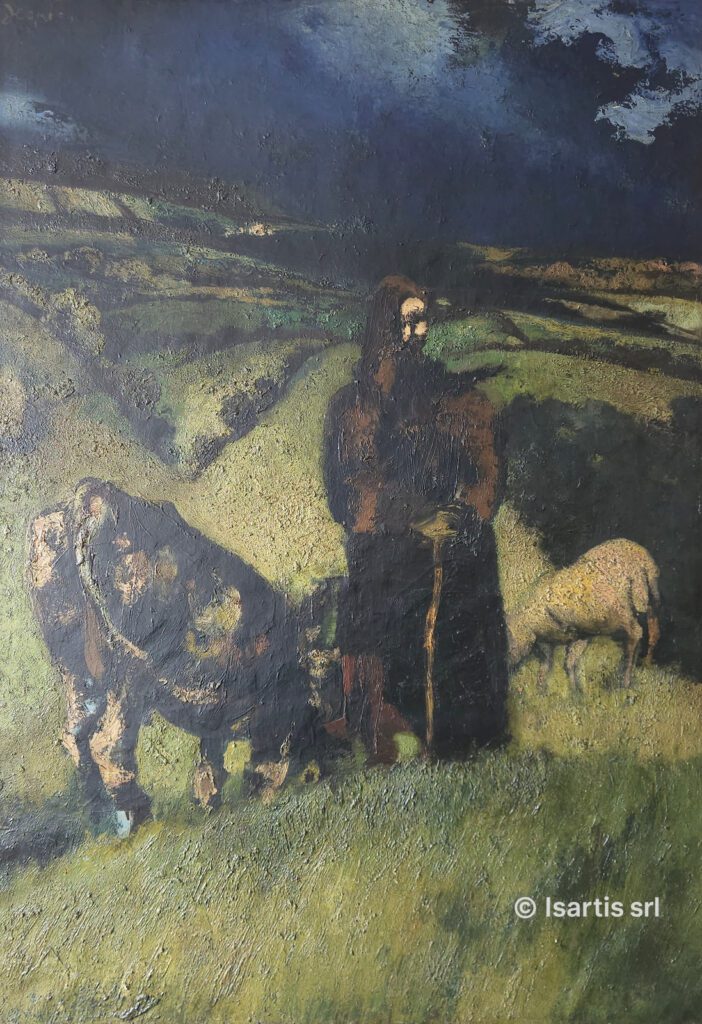
Saint Francis, 1943
The Work
- Title: Saint Francis
- Artist: Floris Jespers
- Date: 1943
- Technique: Oil on canvas
- Dimensions: 200 x 150 cm
In Essence
This monumental "Saint Francis" is an absolute masterpiece from Floris Jespers' contemplative period during the Second World War. Painted in 1943, the work is a powerful symbol of peace and spiritual resilience in dark times. Within the collection, it is of capital importance as the indispensable stylistic and spiritual bridge to his renowned Congolese period.
A Deeper Look
The Scene: A Saint in the Storm
We see a monumental monk figure standing steadfast in a desolate and harsh landscape, under a threatening, dark sky. The atmosphere is one of solitude and perseverance. The saint is surrounded by a large, dark cow and a small, luminous sheep, which symbolise his connection with nature. The forms are not detailed, but sculpted with thick, heavy layers of paint.
The Symbols: Hope in Wartime
Given its date, the symbolism of this work is immense. The choice of Saint Francis, a symbol of peace, gentleness, and non-violence, is a direct counterpoint to the madness of war. His unyielding posture in the stormy landscape symbolises spiritual resilience and perseverance. The animals reinforce this: the cow as a symbol of the earth and life, and the sheep as a sign of innocence and hope.
The Link: The Bridge to Congo
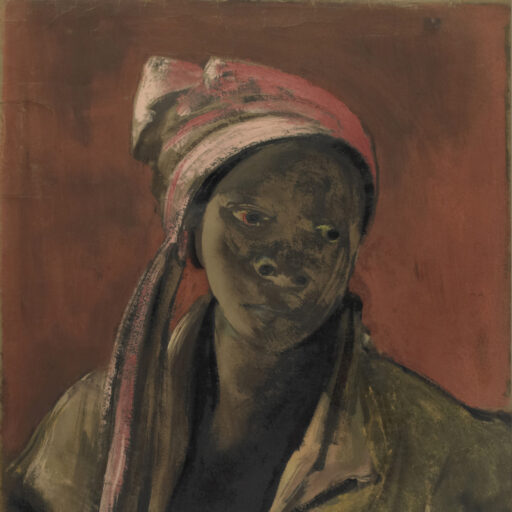
The most important role of this work is that of an indispensable link to his later African work. It forms a thematic diptych with "L'Annonciation"“ through the shared search for an 'earthly spirituality'. More importantly, the style—the monumental, simplified, and expressive forms and the sombre, earthy colour palette —is a direct stylistic harbinger of the way he will depict the figures in his African paintings. This work proves that his journey to Congo was not a break, but the logical continuation of a quest that had already begun here, on Belgian soil.
An Acclaimed Masterpiece
A Masterpiece of Flemish Expressionism
"Saint Francis" is a prime example of Flemish Expressionism. The subjective representation of reality, the heavy, physical paint application (impasto) and the monumental simplification of forms are characteristic of this movement. The monumental scale of the work underscores the ambition and power of this artistic vision.